
Fès, beyond the main lanes
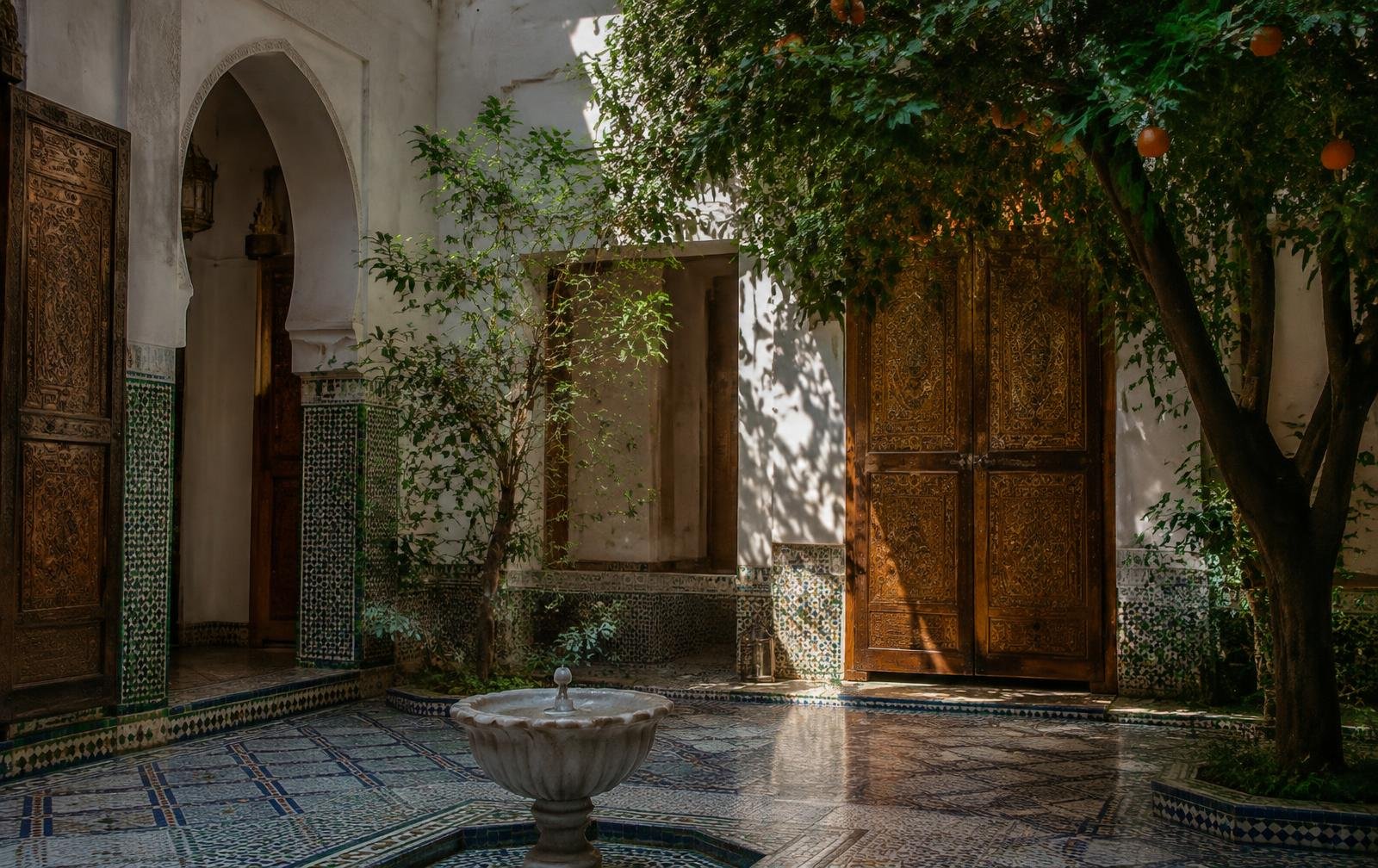
Explore Fès el-Bali with a licensed local guide, visiting courtyard architecture and working craft districts. Tanneries are pungent workplaces, not simply photographic viewpoints.
From Fès workshops to Atlas valleys and Saharan dunes, Morocco rewards a considered route rather than a race between cities.
Morocco changes markedly between the Atlantic coast, the Middle Atlas and the palm valleys south of the mountains. In Fès, narrow lanes lead to working tanneries and tiled courtyard houses; around Marrakech, mornings might begin in a garden and end at a neighbourhood grill. We favour time with specialist guides and craftspeople, leaving space for an unhurried lunch rather than treating every medina as a checklist.
We plan Morocco around private drivers, characterful houses and sensible overnight stops, matching the route to your tolerance for road travel. The caveat is distance: the desert is not a convenient Marrakech excursion, and reaching it properly means several substantial driving days.
Explore Fès el-Bali with a licensed local guide, visiting courtyard architecture and working craft districts. Tanneries are pungent workplaces, not simply photographic viewpoints.
Stay near Imlil for village walks, walnut groves and views towards Toubkal. Walks are tailored to fitness, altitude and the condition of mountain paths.
Cross the Tizi n’Tichka pass to Aït Benhaddou, then continue towards Skoura, where earthen kasbahs stand among irrigated palm plots.
Shop with a cook before preparing seasonal salads, preserved-lemon dishes and a tagine. Vegetarian menus work well when arranged ahead; disclose allergies before booking.
Visit a working ceramics workshop to see clay shaping, glazing and zellij cutting. We agree the purpose of the visit beforehand so it does not become an extended shopping stop.
Follow village paths with a local mountain guide, choosing a route suited to the group. Toubkal's summit is a separate, strenuous undertaking, not an add-on to a gentle valley stay.
Walk onto the dunes as the light softens, then return for dinner. Camp comfort varies considerably; wind, neighbouring vehicles and cold nights remain possible even at the expensive end.
We change every plan to suit you. Tell us what to add, remove or slow down.
Arrive and transfer to a courtyard house. Divide the next two days between the Ben Youssef Madrasa, selected souks and gardens, with a guided evening around Jemaa el-Fna. Book major gardens ahead and keep afternoons flexible.
Drive roughly two hours into the mountains. Take a guided village walk and a longer valley outing if conditions allow, with time back at the lodge. Winter snow can change both walks and access.
Travel via Tizi n’Tichka and Aït Benhaddou to Skoura. This is a full road day, often eight hours or more with sightseeing and lunch, so arrive without further plans.
Continue east through the Dadès region towards Merzouga, allowing around six to seven hours before substantial stops. Spend one night in a desert-edge lodge and one in a tented camp, with a guided dune walk and an optional short camel ride.
Leave the dunes for the Ziz Valley and continue to Midelt, roughly five hours away before stops. This practical overnight breaks the journey to Fès; accommodation is simpler than in the main cities.
Continue through the Middle Atlas to Fès, allowing four to five hours plus stops. Spend the following day exploring the medina with a specialist guide, including weaving or ceramics according to your interests.
Tell us your dates and who is travelling. Our travel expert will call you with the best plan, hotels and price for Morocco.