
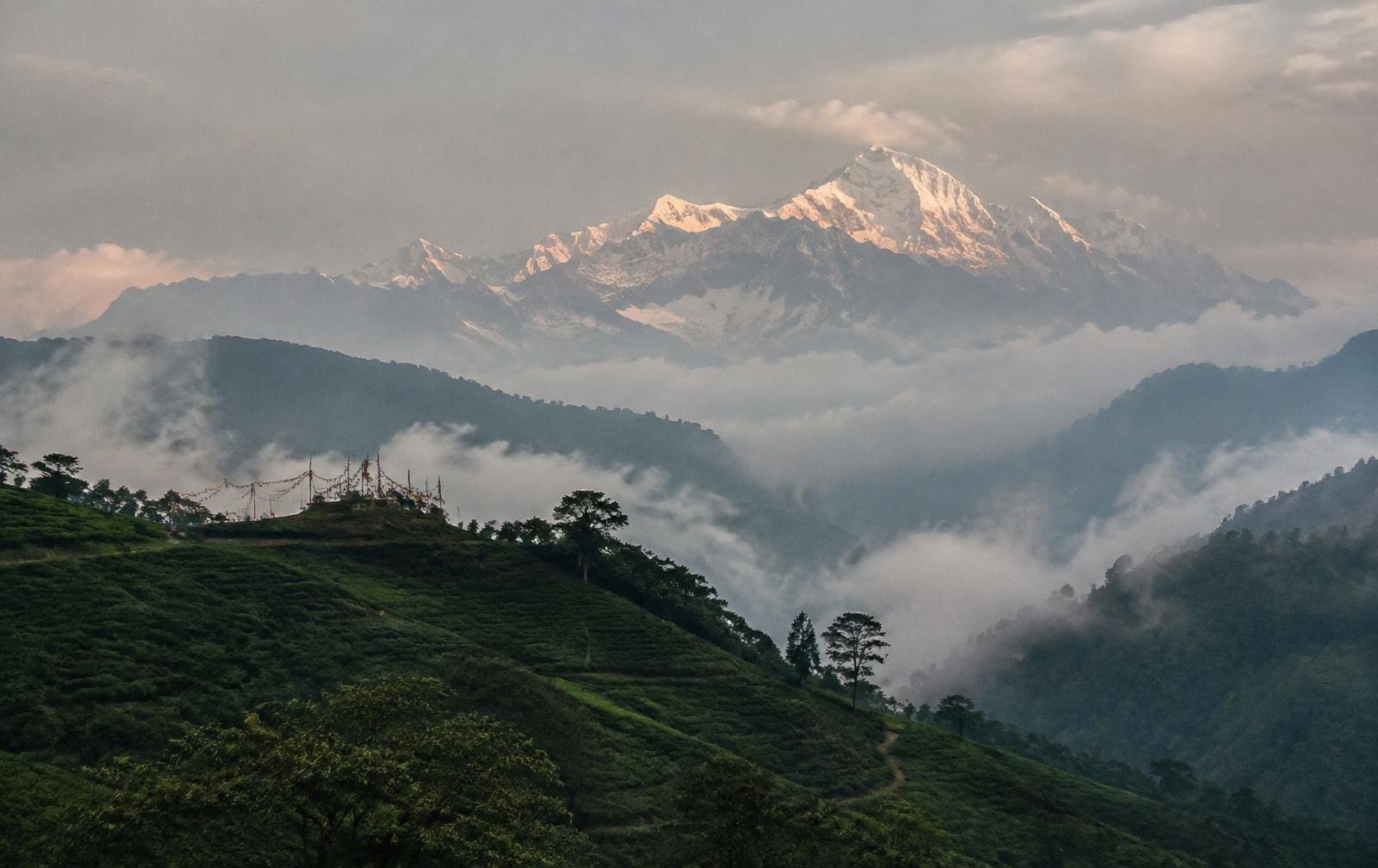
Darjeeling beyond the viewpoints
Spend time in a working tea garden, visit Ghoom Monastery and walk Observatory Hill. A short Darjeeling Himalayan Railway journey adds context, though services and locomotive types need confirming.
Tea-country mornings, Buddhist monasteries and Kangchenjunga views, linked by a deliberately unhurried journey through the eastern Himalayas.
Darjeeling and Sikkim reward early starts: Kangchenjunga is often clearest before breakfast, tea gardens stir slowly, and monastery courtyards are quieter before the day's visitors arrive. We pair Darjeeling's tea estates and railway heritage with western Sikkim's wooded ridges, then continue to Gangtok for a different perspective on the state. The appeal lies as much in these changing landscapes as in the individual stops.
We plan around road time rather than map distance, using a private vehicle, locally based guides and three-night stays wherever possible. Tea visits depend on production schedules; monastery visits respect services and local restrictions. One caveat matters: cloud can conceal the mountains even in the preferred seasons, and landslips can alter a route.
Spend time in a working tea garden, visit Ghoom Monastery and walk Observatory Hill. A short Darjeeling Himalayan Railway journey adds context, though services and locomotive types need confirming.
Use Pelling as a base for Pemayangtse Monastery and the ruins of Rabdentse, with time for forest paths and views across the valley when the weather clears.
Explore Gangtok's markets and Tibetan Buddhist collections, then set aside a separate outing for Rumtek rather than squeezing it between long transfers.
Compare seasonal teas with someone who works on the estate. Spring and later harvests differ substantially; factory activity, estate access and the day's production cannot be guaranteed.
Book a Darjeeling–Ghoom joyride rather than commit a whole day to rail travel. Steam departures are sought after, noisy and sooty; diesel services offer a different experience.
With an extra night or a longer excursion from Pelling, explore Yuksom's historical sites and forest edges with a local guide. The climb to Dubdi Monastery is steep enough to warrant proper shoes and a realistic fitness discussion.
Arrange a hosted meal exploring dishes such as gundruk soup, seasonal greens and momos. Menus reflect the host's community and available produce, rather than treating Sikkim's food as a single tradition.
We change every plan to suit you. Tell us what to add, remove or slow down.
Arrive at Bagdogra and drive into the hills. Keep the first evening free. Over the next two days, arrange a tea-garden visit, walk through town and take a reserved railway joyride towards Ghoom, subject to operation. Make Tiger Hill an optional early start, guided by the forecast.
Allow roughly 4–6 hours for the drive to Pelling, with additional time if roads are disrupted. Visit Pemayangtse and Rabdentse on one day; devote another to Khecheopalri Lake and village stops, with walking tailored to fitness and weather.
Drive to Gangtok, normally a 5–6-hour journey from Pelling. Visit the Namgyal Institute of Tibetology when open, walk MG Marg and arrange a hosted introduction to Sikkimese cooking. Give Rumtek its own half-day or longer, depending on traffic and access.
Travel to Kalimpong, allowing around 3–4 hours in normal conditions. Spend the afternoon with its plant nurseries or on a gentle town walk. This final stop shortens the airport transfer without pretending it removes all road risk.
Allow approximately 3–4 hours to Bagdogra, plus a generous contingency. Prefer an afternoon flight; during unstable weather, we may recommend moving the final night to the plains.
Tell us your dates and who is travelling. Our travel expert will call you with the best plan, hotels and price for Sikkim & Darjeeling.