
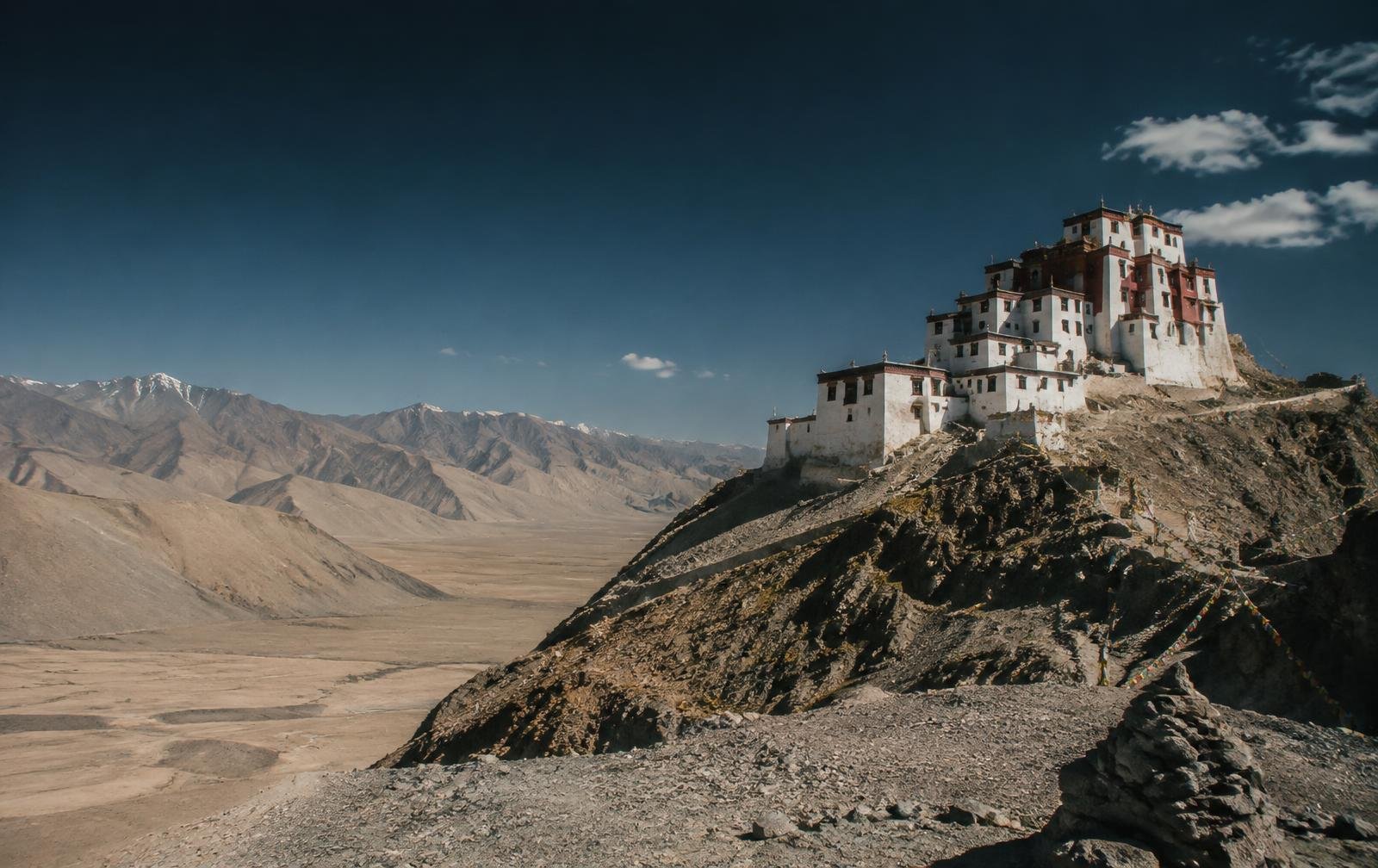
The Indus Valley, without rushing
Visit Thiksey and Hemis after settling into the altitude, balancing monastery interiors with time in Stok or Shey. Prayer schedules and access vary; these are working religious communities.
Monastery courtyards, apricot orchards and high desert roads, with enough time to adjust to Ladakh’s altitude.
Ladakh is a place of distances: between villages, across bare mountain ranges, and from the rhythms of the plains. Around Leh, whitewashed monasteries overlook fields irrigated by snowmelt; beyond Khardung La, the Nubra Valley opens into orchards and sand dunes. We favour journeys that connect these landscapes through village walks, thoughtful monastery visits and small houses, rather than a daily succession of high passes.
We plan the first three nights in Leh around acclimatisation, then build a private road journey with a local driver and room to change course. The honest caveat is that comfort here has limits: altitude affects fit travellers too, roads can close, and expensive accommodation does not always mean dependable heating or polished service.
Visit Thiksey and Hemis after settling into the altitude, balancing monastery interiors with time in Stok or Shey. Prayer schedules and access vary; these are working religious communities.
Base yourself near Sumur for orchard walks and Samstanling Monastery, with a separate outing to Diskit and Hunder. The valley rewards more than a single overnight stop.
The lake’s changing colour is worth the road journey, but its roughly 4,250-metre elevation makes sleeping here a considered choice, not an automatic itinerary inclusion.
Explore Thiksey with a Ladakhi guide who can explain its religious life and architecture. Attend prayers only when visitors are welcome, and ask before photographing people or interiors.
Arrange a hosted meal around local dishes such as skyu or chutagi, with conversation about farming and winter stores. Menus follow the household and season rather than a fixed tasting format.
Follow village lanes beside irrigation channels and cultivated plots, keeping walks short enough for the group’s acclimatisation. Orchard access is by invitation; apricot harvest timing varies with elevation and weather.
For travellers wanting more walking, add a guided section around Likir, Yangthang or Hemis Shukpachan after acclimatisation. Even routes described as easy involve altitude, exposed sun and uneven ground.
We change every plan to suit you. Tell us what to add, remove or slow down.
Transfer directly to your accommodation on arrival. Keep the first 48 hours deliberately quiet, with no strenuous walking or high-pass excursions. If feeling well, use day three for a measured visit to Shey and Thiksey, returning to Leh for a third night.
Cross Khardung La without lingering at the summit, then descend into Nubra. Spend the following days between Sumur’s lanes, Samstanling Monastery, Diskit and Hunder. Allow roughly five to seven hours for the Leh–Sumur drive, depending on road conditions and stops.
Travel via the Shyok route only if local conditions permit and everyone is acclimatising well. Stay near Spangmik for a quiet evening by the lake. If symptoms, weather or accommodation conditions argue against it, replace this section with lower-altitude time around Leh.
Return over Chang La, allowing much of day eight for the drive. Keep day nine flexible: visit Stok, browse Leh’s market or simply rest. These final two nights also provide useful contingency time before the flight out.
Transfer for your flight, usually scheduled in the morning. Avoid a tight onward international connection: wind and weather can disrupt operations at Leh.
Tell us your dates and who is travelling. Our travel expert will call you with the best plan, hotels and price for Ladakh.